.svg)
Best Practices for Pay Increase Recommendations
Several types of salary increase recommendation logics during review reviews.

Launching a compensation review cycle can raise one big question: do your managers have enough structure to make consistent salary increase decisions?
Finding the sweet spot, between giving no guidance and enforcing too rigid a framework, is one of the hardest parts of compensation planning.
A clear framework helps you stay fair, flexible, and scalable without expecting managers to become compensation experts.
By the end of this article, you’ll understand the main types of increase recommendation models and when each one fits best.
Common types of increase frameworks
When defining how salary adjustments should be decided and distributed, most organizations use one of these three methods:
- Flat percentage increase
- Performance-based matrix
- Performance and range position matrix
1. Flat percentage increase

In this model, everyone receives the same recommended percentage increase, for example, a universal 5%. Managers can make exceptions or reallocate individual increases, as long as they stay within the overall budget.
Benefits:
- Very easy to apply and explain.
- Empowers managers to exercise discretion in their decisions.
Challenges:
- Risk of inequity, since performance plays no formal role in adjustments.
- Requires managers to already have strong judgment and compensation awareness.
- Relies heavily on HR and leadership to review manager proposals.
This method suits organizations that want a simple process and wish to prioritize manager autonomy. It works best in teams where managers have deep knowledge of employee performance and can make fair trade-offs within a set budget.
2. Performance-based matrix
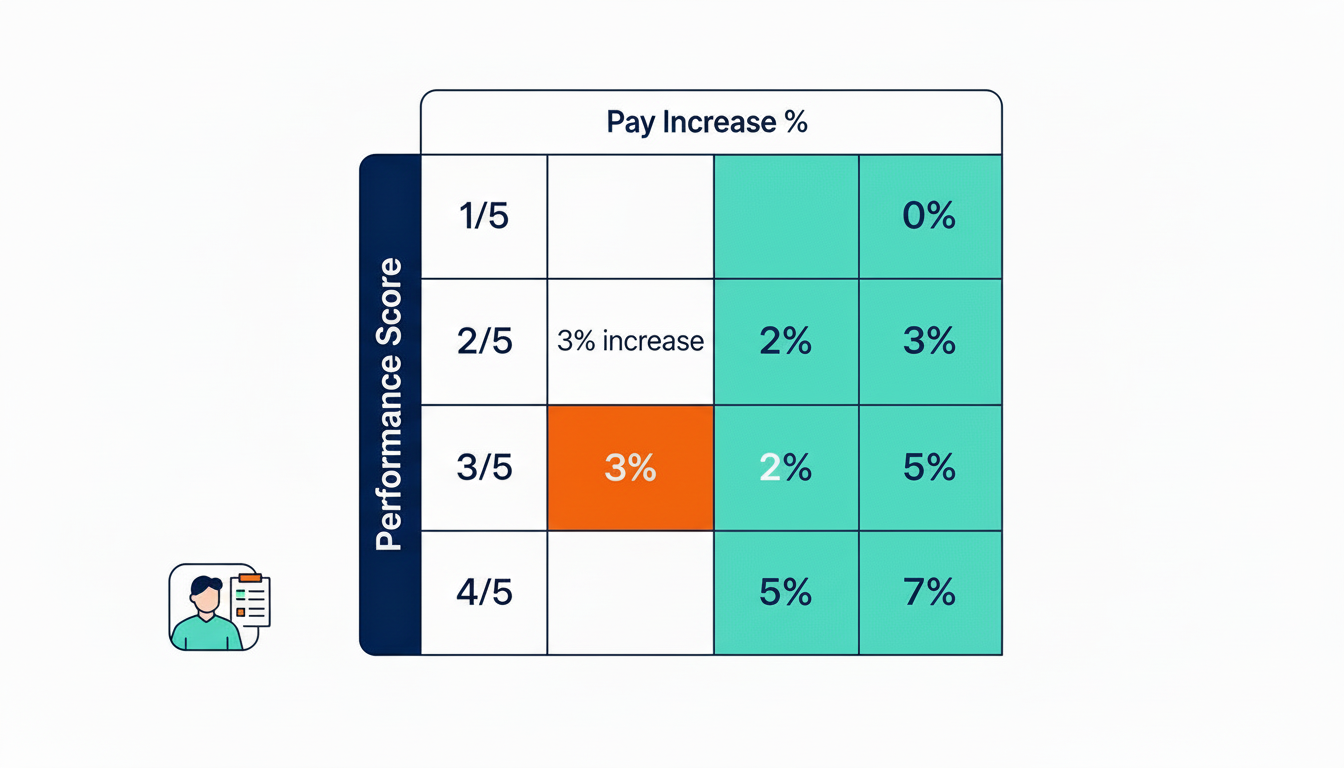
Here, pay increases are directly tied to performance scores. HR defines guidelines—either fixed percentages or percentage ranges—for each performance rating.
Examples:
- A score of 3/5 = 3% recommended increase.
- A score of 3/5 = between 3% and 5% depending on other factors.
Benefits:
- Creates a clear link between performance and rewards.
- Maintains flexibility by giving managers room to adjust within defined limits.
- Strengthens structure and transparency.
Challenges:
- Requires more setup time from HR to design and communicate effectively.
- Managers may still propose adjustments outside the model in certain cases.
This approach offers a good starting balance, structured yet adaptable, and helps connect recognition with measurable contributions.
Performance-based recommendations: You can define performance metrics and simply link it to recommendation increases.
3. Performance + range position matrix
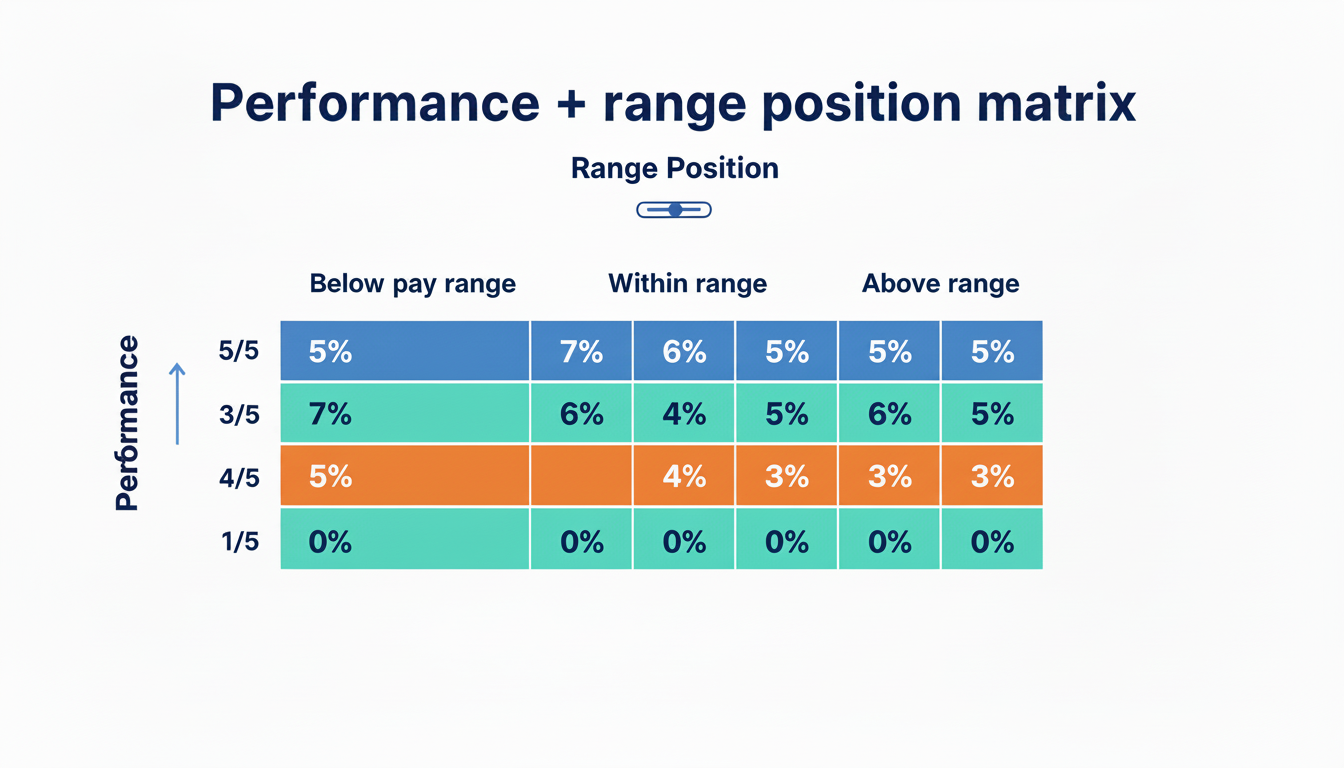
This advanced model combines two dimensions: the employee’s performance score and their position within your salary range (often expressed as a compa-ratio).
In practice, it works like this:
- An employee rated 3/5 who is below the midpoint of their range might receive a 5% increase.
- Another at the same performance score but above the midpoint might only be eligible for a 3% increase.
Sometimes, increases aren’t handled as percentages but as targeted adjustments within the compensation range (for example, aligning pay to the minimum of the range).
Benefits:
- Ensures consistency and fairness within comparable roles.
- Makes inequities easy to identify and address.
- Retains limited flexibility for exceptional cases.
Challenges:
- More complex to implement and explain, as location, performance, and market positioning all factor in.
- Requires careful manager enablement and clear communication with employees.
This model suits organizations seeking to manage equity across roles and geographies while maintaining performance as a decision driver.
Additional factors to consider
Your compensation framework might also include variables such as:
- Promotions: recommended increases when moving to a higher level.
- Seniority: predefined adjustments for recent hires or early-stage employees.
Whatever structure you choose, ensure decisions are transparent, explainable, and align with your company’s values.
Bringing it all together
There’s no single right answer when designing your compensation philosophy. Your model should reflect your company culture and strategic goals:
- How much autonomy should managers have?
- How important is internal fairness compared to market competitiveness?
- Should performance or range position play the bigger role?
Your organization’s stage, values, and talent strategy will shape the right balance. The key is to stay consistent, communicative, and data-informed.
How Heyquity Can Help
Running compensation cycles doesn’t have to be complicated. Heyquity helps HR teams build flexible frameworks, bring all data into one system, and streamline recommendations and approvals, all without spreadsheets.
Our platform adapts to your compensation philosophy so you can manage increases confidently and efficiently.
Reach out to see how Heyquity can support your next review cycle.
Elevate your total rewards
processes





Heyquity is a compensation platform for rewards and compensation teams built to support consistent compensation processes while ensuring pay equity across locations.