.svg)
How to Create Effective Compensation Ranges for Your Organization
A step-by-step guide on how to setup compensation ranges.

Trying to figure out when and how to define compensation ranges for your organization? You’re not alone. This guide walks you through the essential steps to create a strong, transparent structure that supports fair pay decisions.
Compensation ranges are a crucial foundation for consistent, equitable, and scalable pay practices. Understanding how they work—and how to build them—will help your company make smarter, more transparent compensation choices for every team member.
What are compensation ranges?
Compensation ranges represent the pay boundaries your company sets for a particular job or group of similar roles. A typical range includes a minimum, midpoint (or benchmark), and maximum pay level for each position.
Most organizations define these ranges by base salary, but they can also cover total compensation, such as bonuses or equity. Once in place, these ranges guide decisions made by HR teams, managers, and leaders—and can even be referenced when hiring new talent.
Why They Matter
A solid compensation framework creates fairness and clarity. It ensures that salary reviews, budget changes, and promotions follow the same logic across the organization.
By focusing on the value of the role, not the individual, you keep pay decisions consistent and unbiased. Colleagues in comparable roles who deliver similar impact are rewarded equitably, reinforcing trust and transparency across teams.
How to Structure Compensation Ranges
If you don’t already have compensation ranges, you might be wondering how to establish one. How many ranges should you have? Should you be above, below, or at market, and how do you know where you are? Below are a few steps to get started:
1. Group roles into families
Start by organizing your positions into job families, for example, Engineering, Product, or Sales. Within each family, roles should share similar skill levels, responsibilities, and pay potential.
If your company operates internationally, break down those groups further by country or region. This way, comparisons remain fair within similar economic and market conditions.
International: If your organization is already spread across different countries, use this information to further group your employees so you ensure to compare similar environments.
2. Define job levels
Once your job families are mapped, assign levels that reflect seniority or experience (for instance, Level 1 for junior roles up to Level 7 for executives).
Then, match every existing role to one of these levels. Occasionally, you might find overlapping titles or the need to rename some roles to maintain consistency. Try to limit exceptions, this step creates the structure that will sustain your pay system long-term.
When you combine job family, level, and location into one structure, you’ve essentially created your peer group, the unit that your ranges will be based on.
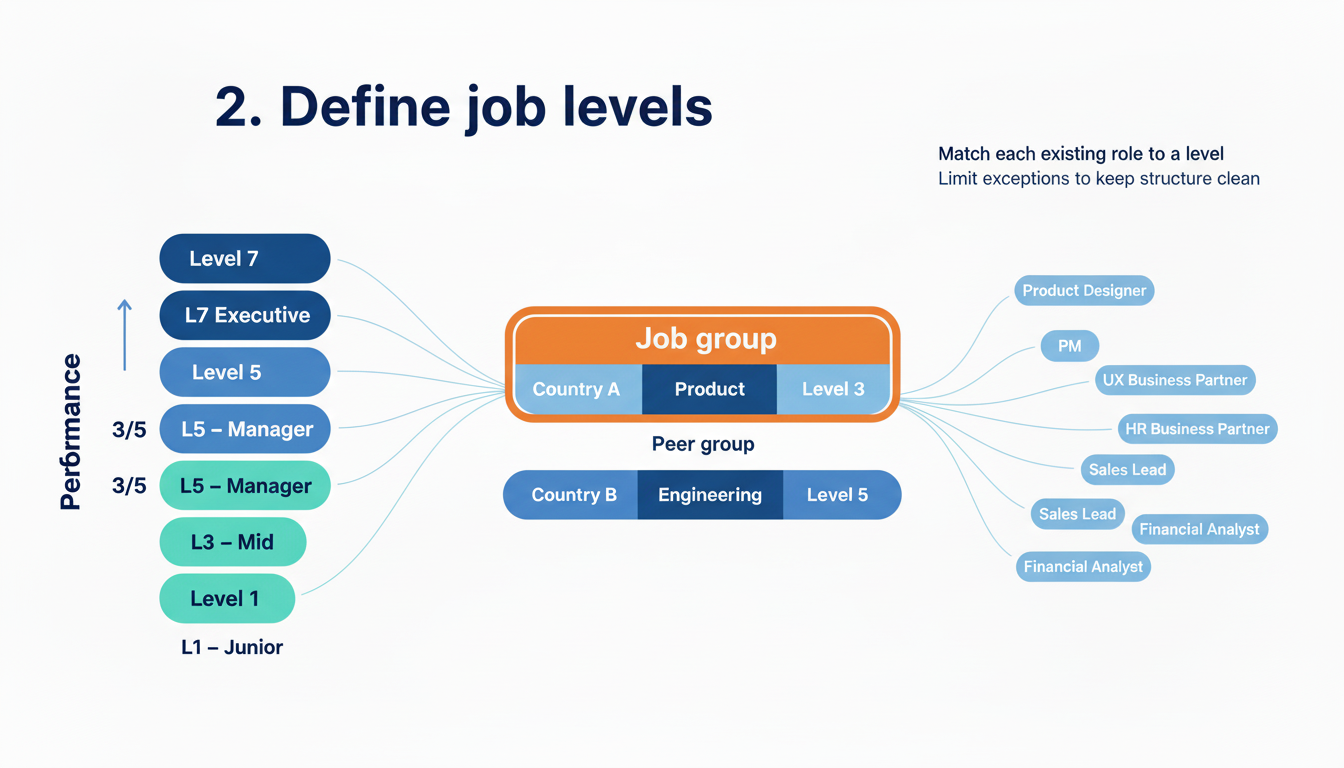
In this case, your structure is based on a group of employees from similar location (Country), Job family and job levels. You just created your job group!
3. Review your current pay data
Before setting new ranges, analyze what you’re already paying your people. Use your internal data to determine realistic boundaries that reflect your company’s current state.
For each job group, identify the minimum, median, and maximum compensation values among your employees. These points will help visualize where each role currently sits.
If data is limited, build initial ranges around a midpoint. For instance, you might set:
- Minimum = 80% of midpoint
- Maximum = 120% of midpoint
Adjust these ranges to reflect your pay strategy, whether you aim to sit below, at, or above the market. Cross-check with external benchmarks or recruitment data where possible to ensure alignment.
Use this process to identify and correct outliers, especially underpaid employees who fall outside of your new ranges.
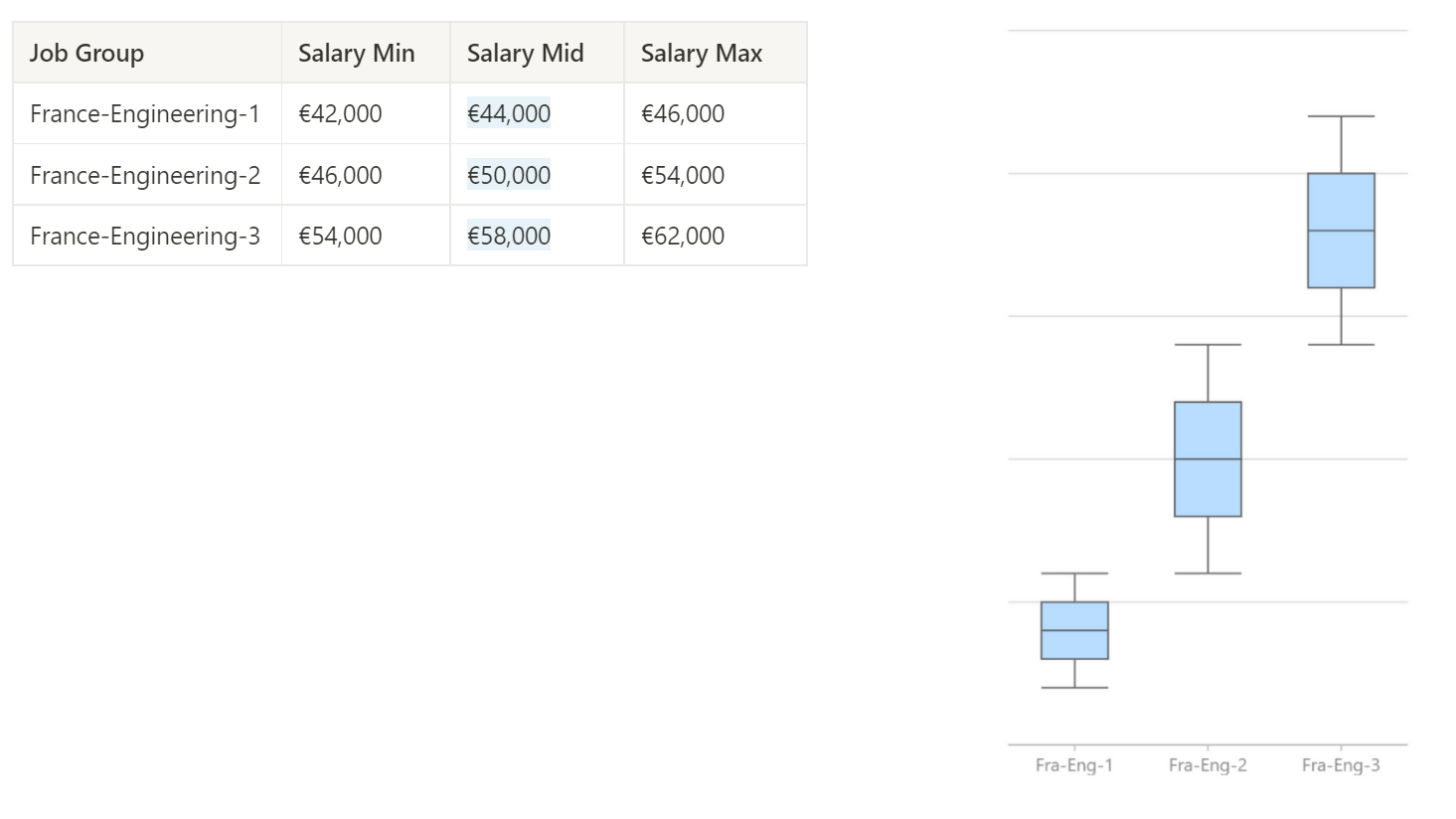
Internal Analytics: Compare in a clic to which extent your compensation policy is aligned with the internal reality.
4. Review and evolve
Your compensation ranges are not static. Revisit them regularly to adapt to changing markets, business strategies, or new geographies.
Over time, they’ll become the foundation for more structured decisions about new hires, raises, and promotions. They also promote pay equity by offering a clear view of how roles compare within the organization, helping employees feel valued and respected.
Simplify with Heyquity
Creating compensation frameworks manually can be complex and time-consuming. Heyquity centralizes all your data, streamlines collaboration between HR, managers, and executives, and simplifies every step of compensation planning.
Skip the spreadsheets. Consolidate your data, automate your reviews, and manage compensation decisions seamlessly, all in one place.
Get in touch to see how Heyquity can support your organization’s next compensation cycle.
Elevate your total rewards
processes





Heyquity is a compensation platform for rewards and compensation teams built to support consistent compensation processes while ensuring pay equity across locations.